Spinocerebellar Ataxia (SCA)
Spinocerebellar Ataxia (SCA) is a hereditary (autosomal dominant) neurodegenerative disorder. It primarily affects the cerebellum and spinal cord, leading to coordination and balance issues (ataxia). As a rare condition, SCA is classified under hereditary cerebellar ataxia.
Although there is no cure for SCA, treatments aim to manage symptoms and enhance the quality of life.
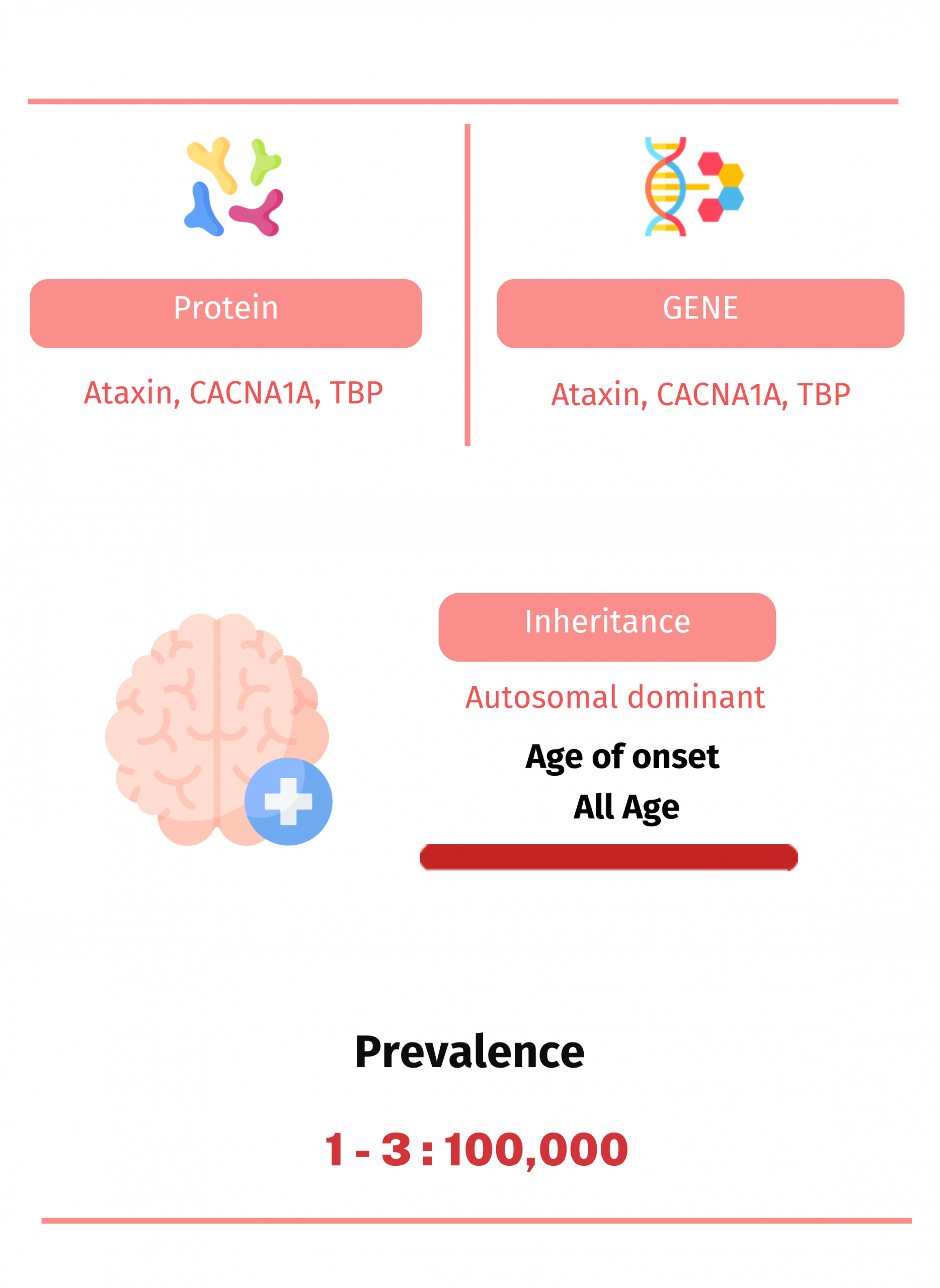
SCA1: Caused by CAG repeat expansions in the ATXN1 gene region on chromosome 6p23.
SCA2: Caused by CAG repeat expansions in the ATXN2 gene on chromosome 12q24.12.
SCA3, also known as Machado-Joseph Disease (MJD): Caused by CAG repeat expansions in the ATXN3 gene on chromosome 14q32.12.
SCA6: Caused by CAG repeat expansions in the CACNA1A gene on chromosome 19p13.
SCA7: Caused by CAG repeat expansions in the ATXN7 gene on chromosome 3p12.1.
SCA17: Caused by CAG repeat expansions in the TBP gene on chromosome 6q27.
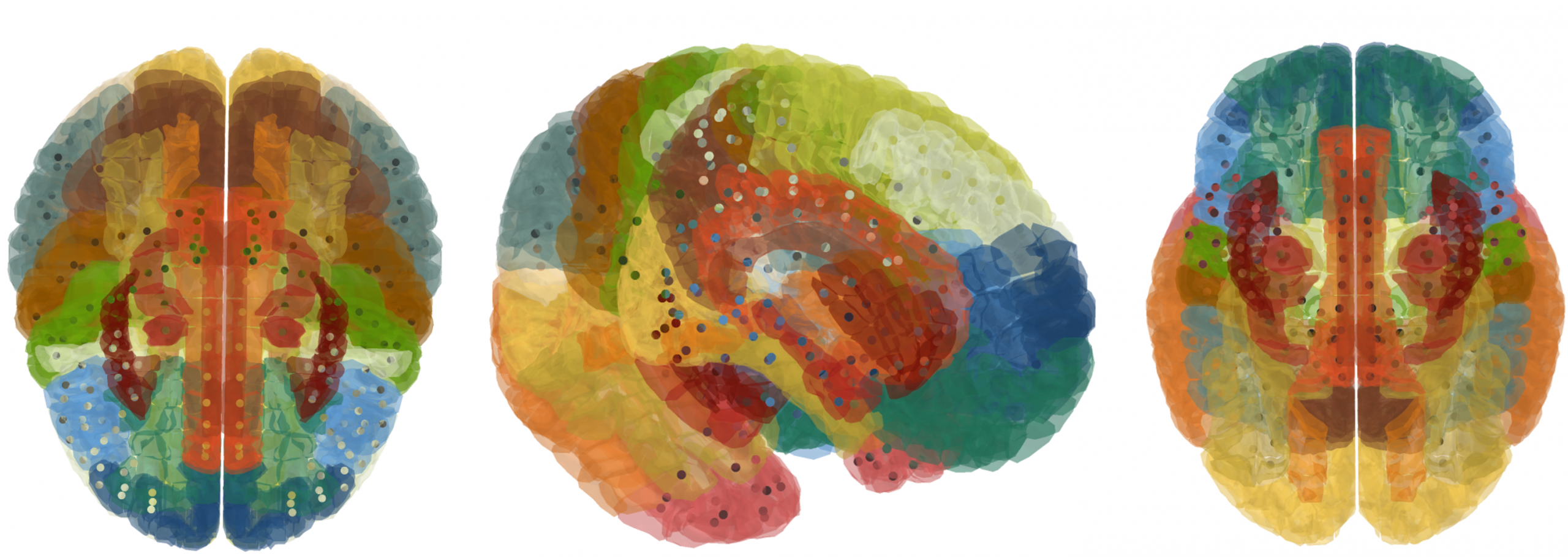
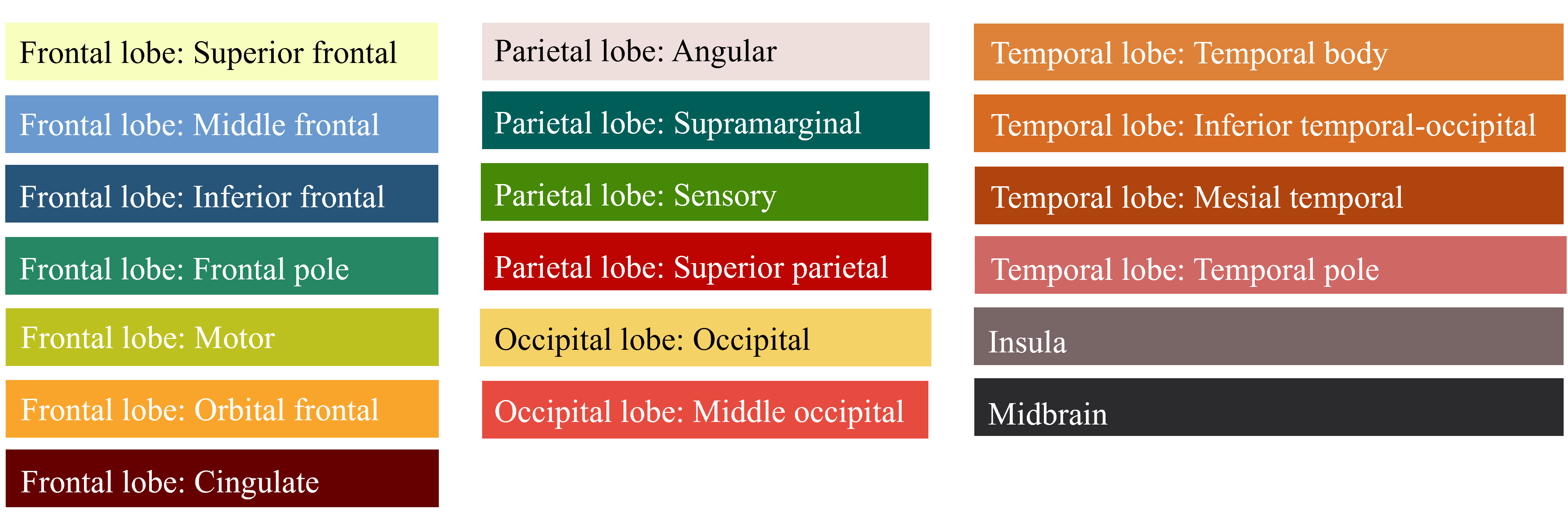
This figure shows the location of Spinocerebellar Ataxia within the brain. Different colors represent various brain regions according to their labels, while the points indicate areas with a potential presence of Spinocerebellar Ataxia.
Symptom
Symptoms of Spinocerebellar Ataxia (SCA) can vary depending on the subtype and severity of the condition. However, common symptoms may include:
- Ataxia: The hallmark symptom of SCA is ataxia, which is a lack of muscle coordination that affects voluntary movements. This can result in unsteady gait, difficulty with balance, and problems with fine motor skills.
- Dysarthria: SCA may cause dysarthria, which is difficulty in speaking due to impaired control of the muscles used for speech. Speech may be slurred or difficult to understand.
- Nystagmus: Some individuals with SCA may experience nystagmus, which is involuntary, rhythmic eye movements that can affect vision and coordination.
- Muscle weakness and atrophy: Weakness and wasting (atrophy) of muscles, particularly in the limbs, may occur in SCA.
- Tremors or involuntary movements: Some individuals with SCA may experience tremors or other involuntary movements, such as jerking or twitching of muscles.
- Fatigue: Fatigue is a common symptom in SCA and may result from the effort required to compensate for impaired coordination and movement.
- Difficulty with swallowing (dysphagia): Swallowing difficulties may occur in advanced stages of SCA, leading to choking or aspiration pneumonia.
- Vision problems: SCA can affect vision, causing blurred vision, double vision (diplopia), or difficulty controlling eye movements.
- Cognitive changes: While cognitive impairment is less common in SCA compared to some other neurodegenerative diseases, some individuals may experience changes in cognition, including difficulties with memory, attention, and executive function.
Although cognitive function is usually preserved in the early stages, issues with executive function and verbal memory can occur in the later stages.