
Progressive Supranuclear Palsy (PSP)
Progressive Supranuclear Palsy (PSP) is a rare neurodegenerative disorder. It’s classified as a tauopathy due to abnormal tau protein accumulation.
Currently, there is no cure for PSP, and treatment focuses on managing symptoms and improving quality of life. Additionally, PSP is associated with ocular motor dysfunction, postural instability, and akinesia-rigidity. It’s classified as a 4R tauopathy, with specific genetic risk factors identified.

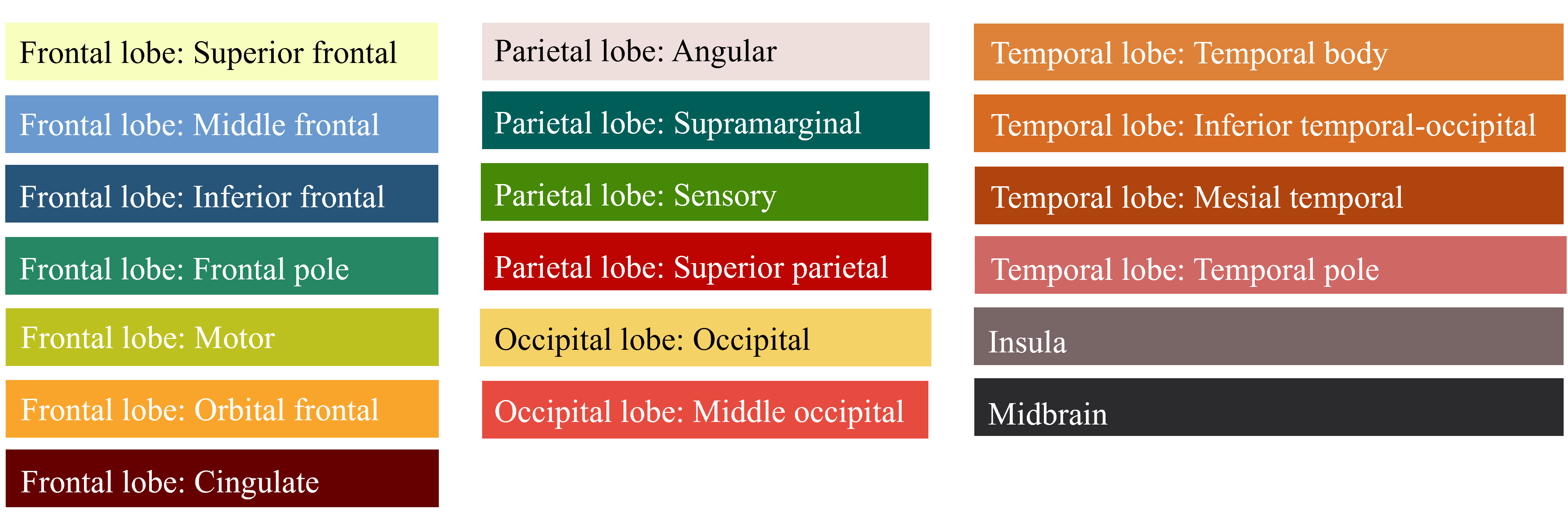
This figure shows the location of Progressive Supranuclear Palsy within the brain. Different colors represent various brain regions according to their labels, while the points indicate areas with a potential presence of Progressive Supranuclear Palsy.
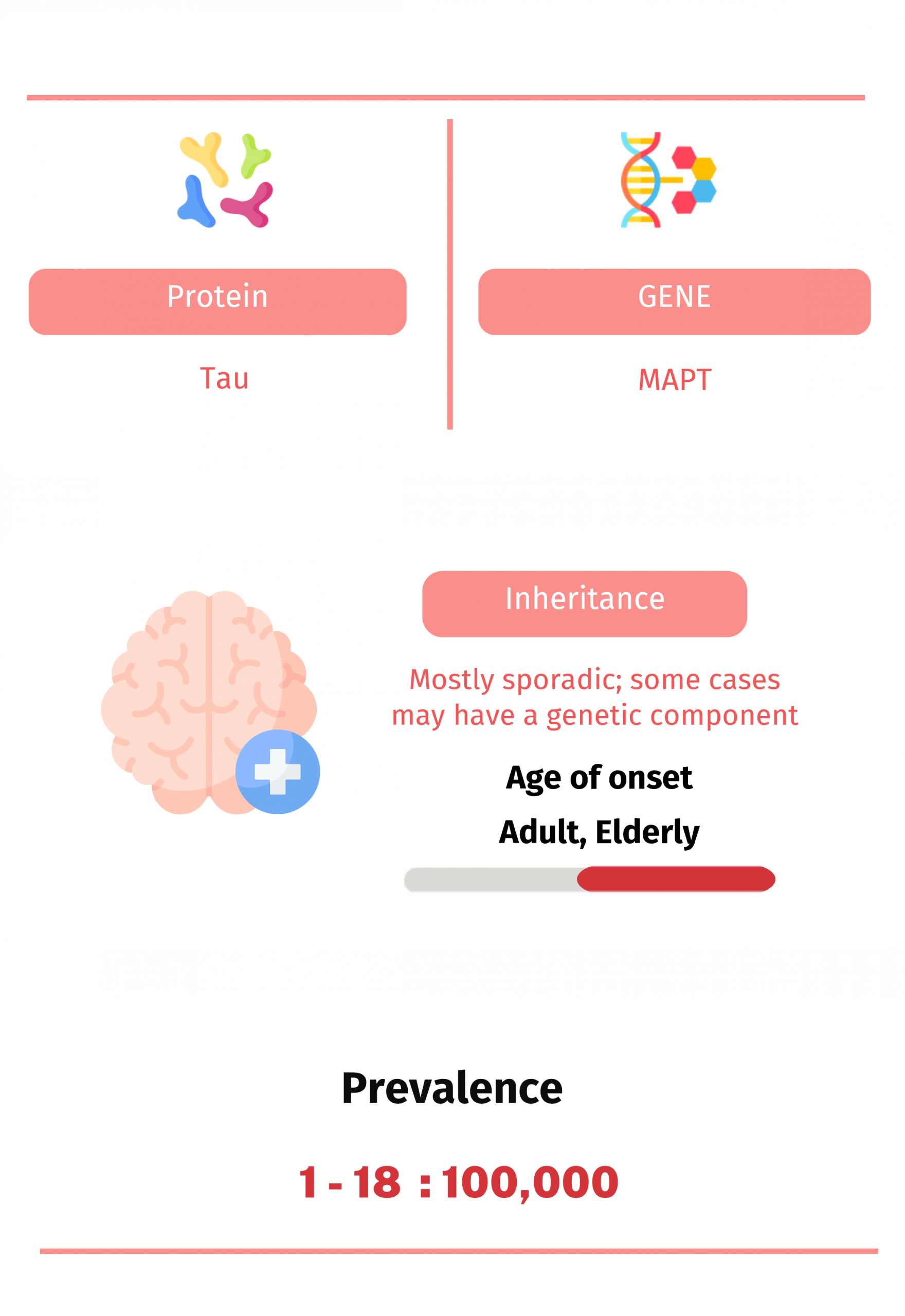
Symptom
- Slowing of vertical saccadic eye movements: This is addressed under “Ocular Motor Dysfunction,” where difficulties with eye movements, including looking up and down, are mentioned.
- Falls due to postural instability: Falls and postural instability are specifically mentioned as common symptoms of PSP.
- Axial akinetic-rigid syndrome: The description of muscle stiffness and slowness of movement aligns with this symptom.
- Cognitive impairment: Cognitive changes, including difficulties with memory, attention, and executive function, are highlighted as symptoms of PSP.
- Problems in speech: Speech difficulties, such as slurred speech (dysarthria), are mentioned as symptoms of PSP.
- Supranuclear gaze palsy: This is addressed under “Ocular Motor Dysfunction,” where difficulties with eye movements, including supranuclear gaze palsy, are mentioned.
- Difficulties in swallowing: Difficulty swallowing (dysphagia) is noted as a symptom of PSP.