Multisystem Atrophy (MSA)
Multiple System Atrophy (MSA) is a neurodegenerative disorder. Individuals with MSA typically experience a median survival of 6-9 years from the onset of symptoms.
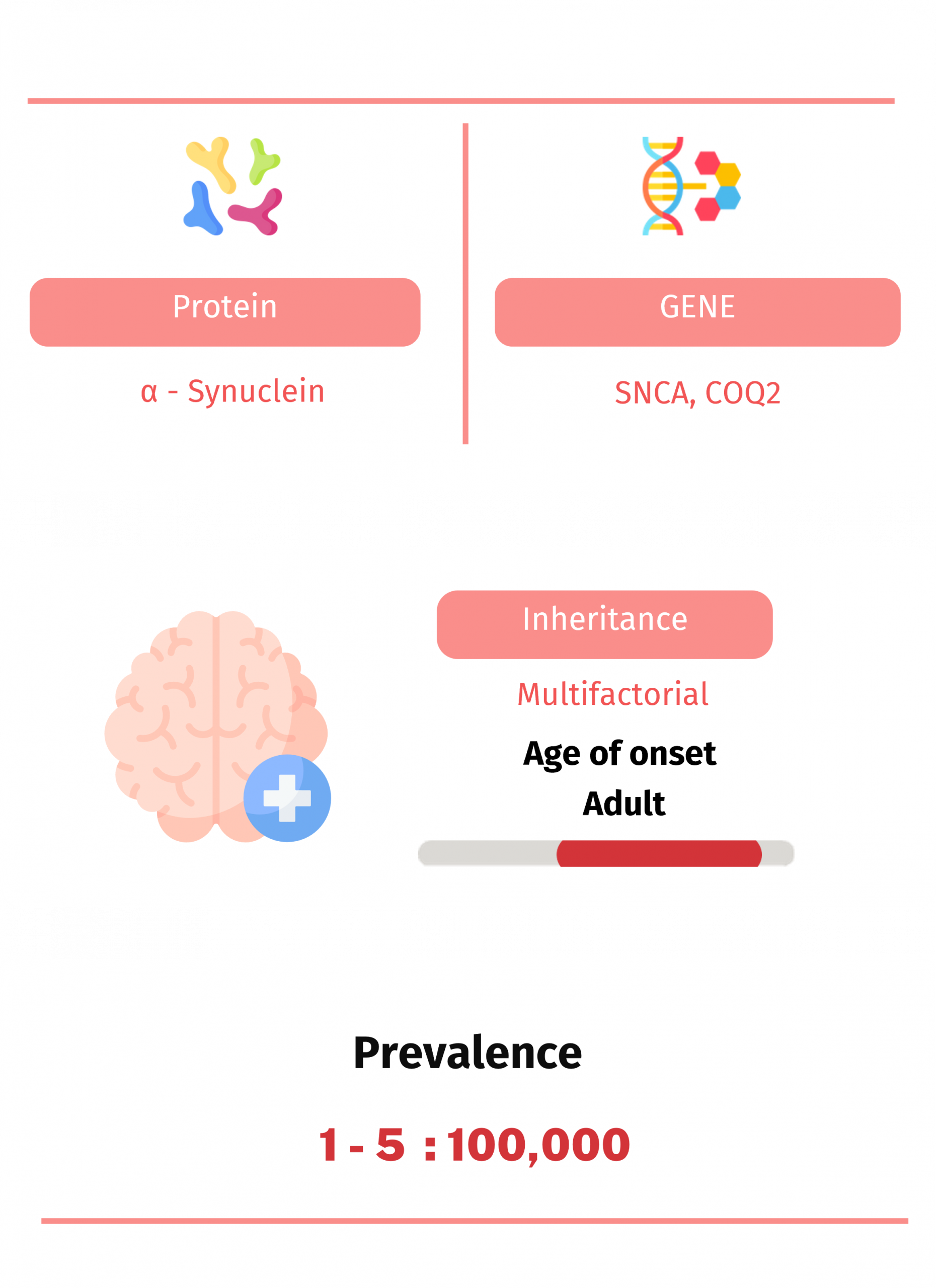
The exact cause of MSA is unknown, but it is believed to involve the abnormal accumulation of a protein called alpha-synuclein in certain brain cells, particularly oligodendroglia. This accumulation, along with neurodegeneration in striatonigral and olivopontocerebellar structures, is considered the pathological hallmark of the disease. Additionally, mutations in the COQ2 gene, which encodes an enzyme involved in the biosynthesis of coenzyme Q10, have been identified in some families with MSA. Certain variants of the COQ2 gene have also been associated with an increased risk for sporadic MSA.
This combination of autonomic dysfunction, motor symptoms, and pathological features contributes to the complex clinical presentation of MSA, making diagnosis and management challenging for healthcare professionals. Treatment focuses on alleviating symptoms and improving quality of life, as there is currently no cure for the disease.
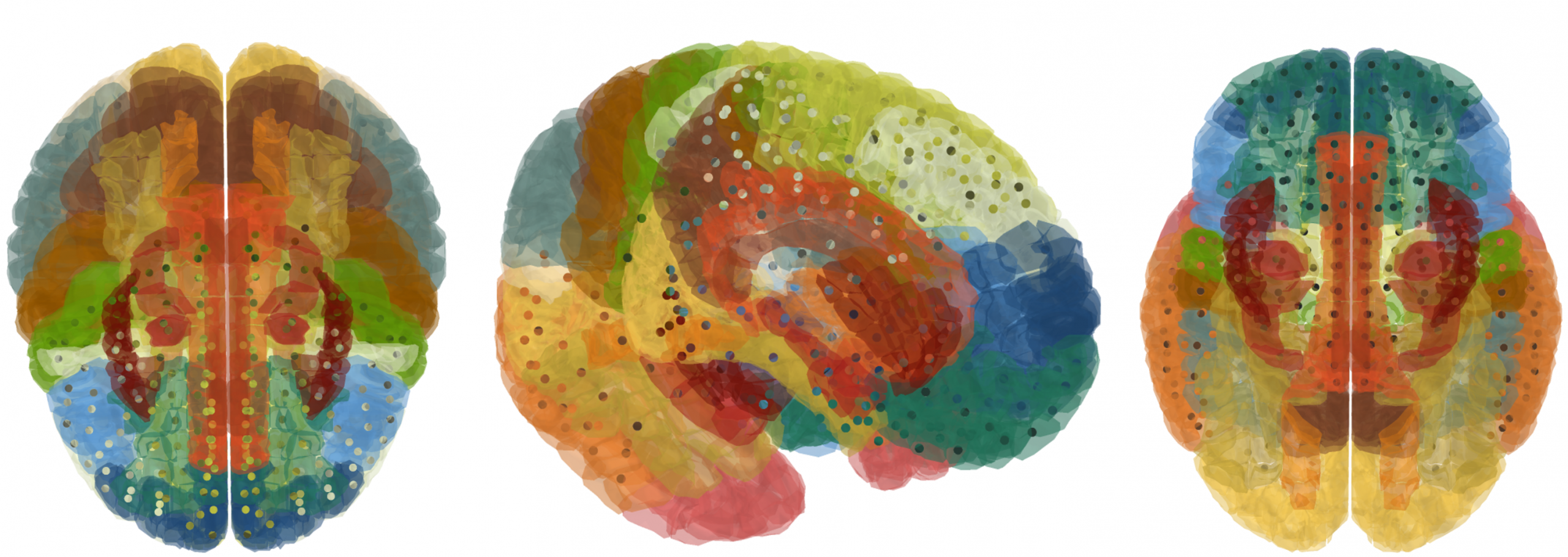
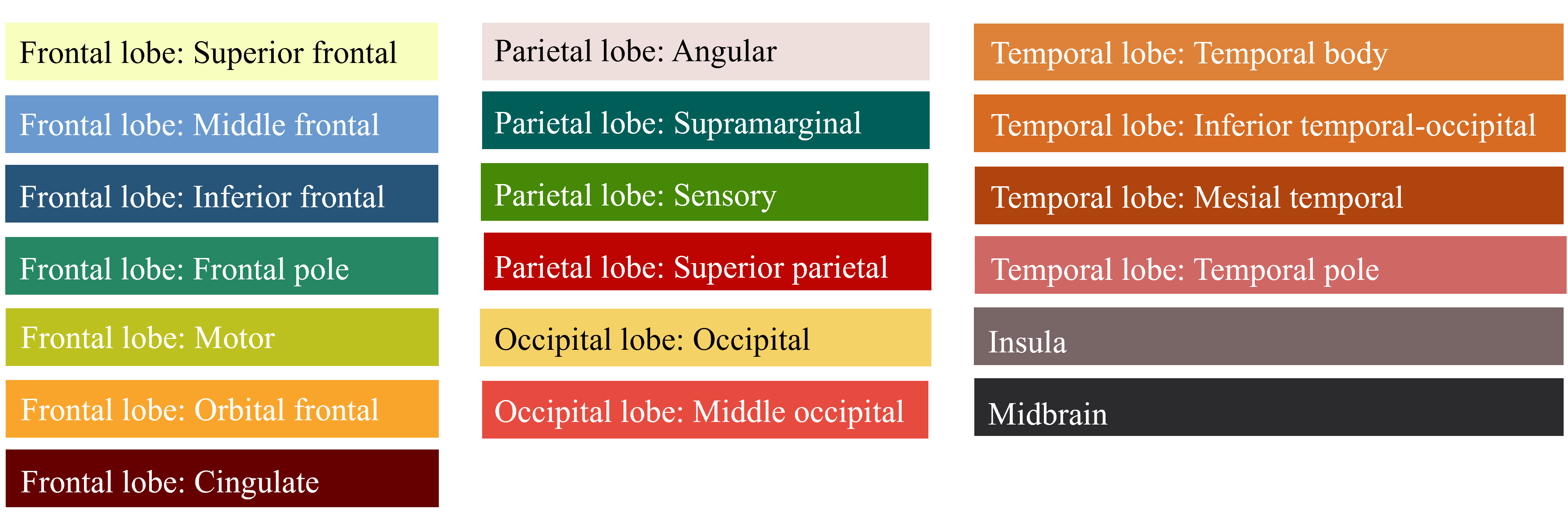
This figure shows the location of Multisystem Atrophy within the brain. Different colors represent various brain regions according to their labels, while the points indicate areas with a potential presence of Multisystem Atrophy.
Symptom
Symptoms of Multiple System Atrophy (MSA) can vary depending on the subtype (MSA-P or MSA-C) and the stage of the disease. Common symptoms may include:
- Autonomic Dysfunction:
– Orthostatic hypotension (low blood pressure upon standing)
– Urinary incontinence or retention
– Erectile dysfunction - Parkinsonism (MSA-P subtype):
– Bradykinesia (slowness of movement)
– Rigidity (stiffness of muscles)
– Tremor (usually less prominent than in Parkinson’s disease)
– Postural instability (difficulty maintaining balance) - Cerebellar Impairment (MSA-C subtype):
– Ataxia (lack of coordination and balance)
– Dysarthria (difficulty speaking)
– Dysmetria (inaccurate movements)
– Nystagmus (involuntary eye movements) - Corticospinal Signs: Hyperreflexia (exaggerated reflexes)
- Muscle Weakness: Progressive weakness of voluntary muscles, leading to difficulties with movement and mobility
- Dysphagia: Difficulty swallowing, which can lead to choking or aspiration pneumonia
- Sleep Disturbances:
– Rapid eye movement (REM) sleep behavior disorder
– Insomnia or excessive daytime sleepiness - Cognitive Changes:
– Mild cognitive impairment
– Dementia (may occur in later stages of the disease) - Emotional and Behavioral Changes:
– Depression
– Anxiety
– Apathy
– Impulse control disorders
These symptoms can significantly impact daily functioning and quality of life for individuals with MSA.