Kennedy’s Disease (KD)
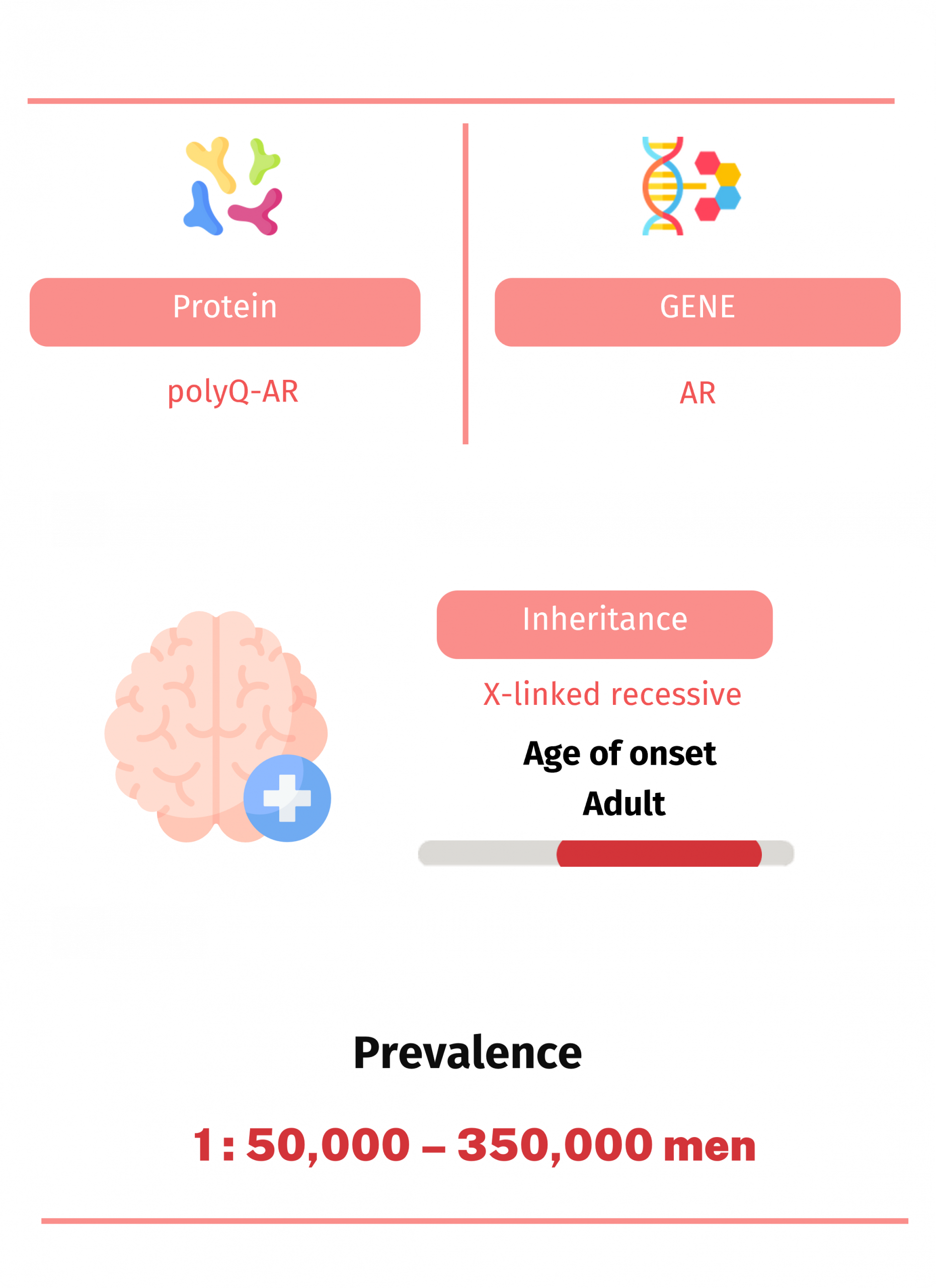
Kennedy’s Disease (KD), also known as Spinal and Bulbar Muscular Atrophy (SBMA) or Bulbospinal Muscular Atrophy (BSMA), is a rare, X-linked recessive motor neuron disease. It is characterized by progressive muscle weakness and atrophy, particularly affecting proximal and bulbar muscles.
The disease is caused by a mutation in the androgen receptor (AR) gene, leading to an abnormal expansion of the CAG trinucleotide repeat. This mutation results in an expanded stretch of glutamines within the AR, causing the receptor to misfold and become proteolytically processed. The mutated AR becomes insensitive to androgen hormones, and in the nucleus, fragments of the AR aggregate. These aggregates are believed to dysregulate the transcription of various proteins, leading to motor neuron degeneration.
There is currently no cure for Kennedy’s Disease, and treatment focuses on managing symptoms and improving the quality of life. This may include physical therapy, speech therapy, and medications to address specific symptoms. Genetic counseling is also recommended for affected individuals and their families.

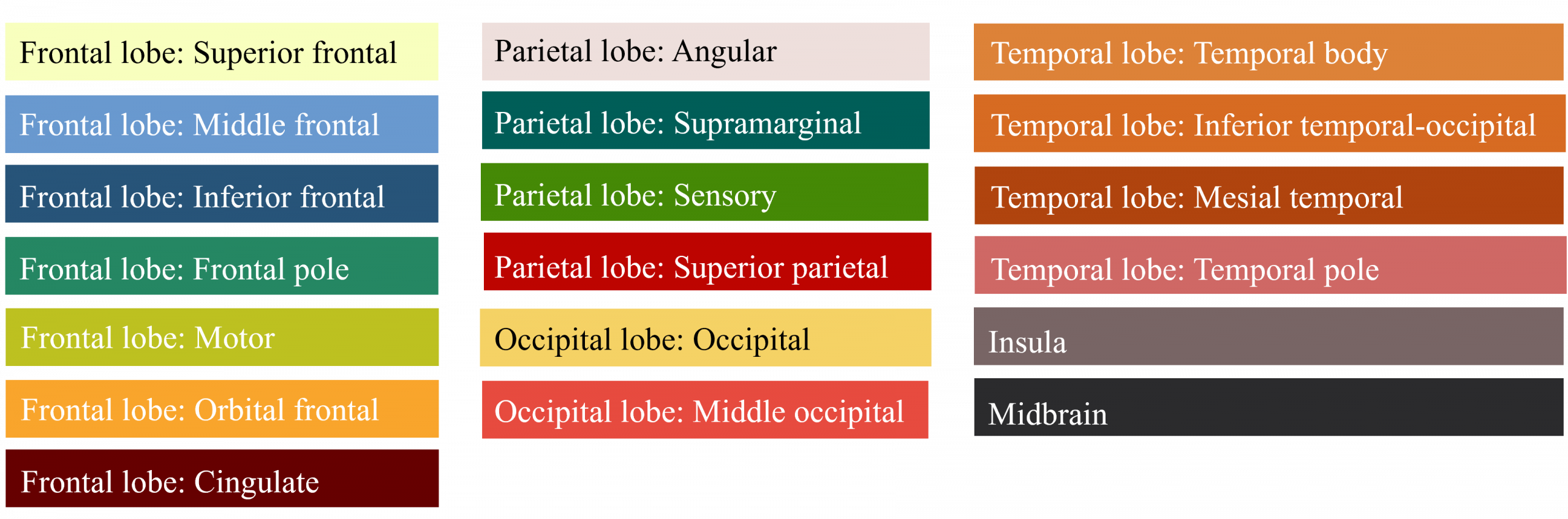
This figure shows the location of Kennedy’s Disease within the brain. Different colors represent various brain regions according to their labels, while the points indicate areas with a potential presence of Kennedy’s Disease.
Symptom
Symptoms of Kennedy’s Disease (KD):
- Muscle Weakness and Atrophy: Progressive weakening and wasting of muscles, particularly in the limbs, face, and throat.
- Bulbar Symptoms: Difficulty with speaking (dysarthria), swallowing (dysphagia), and other functions controlled by bulbar muscles.
- Endocrine Abnormalities: Gynecomastia (breast enlargement in males), reduced fertility, and testicular atrophy due to androgen insensitivity.
- Tremors and Fasciculations: Involuntary muscle twitching and trembling.
- Sensory Symptoms: Mild sensory neuropathy, which may cause numbness or tingling.
- Muscle Cramps: Frequent muscle cramps and spasms.
- Fatigue: Chronic fatigue and weakness.
- Difficulty Walking: Trouble with balance and coordination, leading to an unsteady gait.
- Respiratory Problems: Respiratory muscle weakness, which may lead to breathing difficulties.
These symptoms typically appear in adulthood, usually between the ages of 30 and 50, and progressively worsen over time.